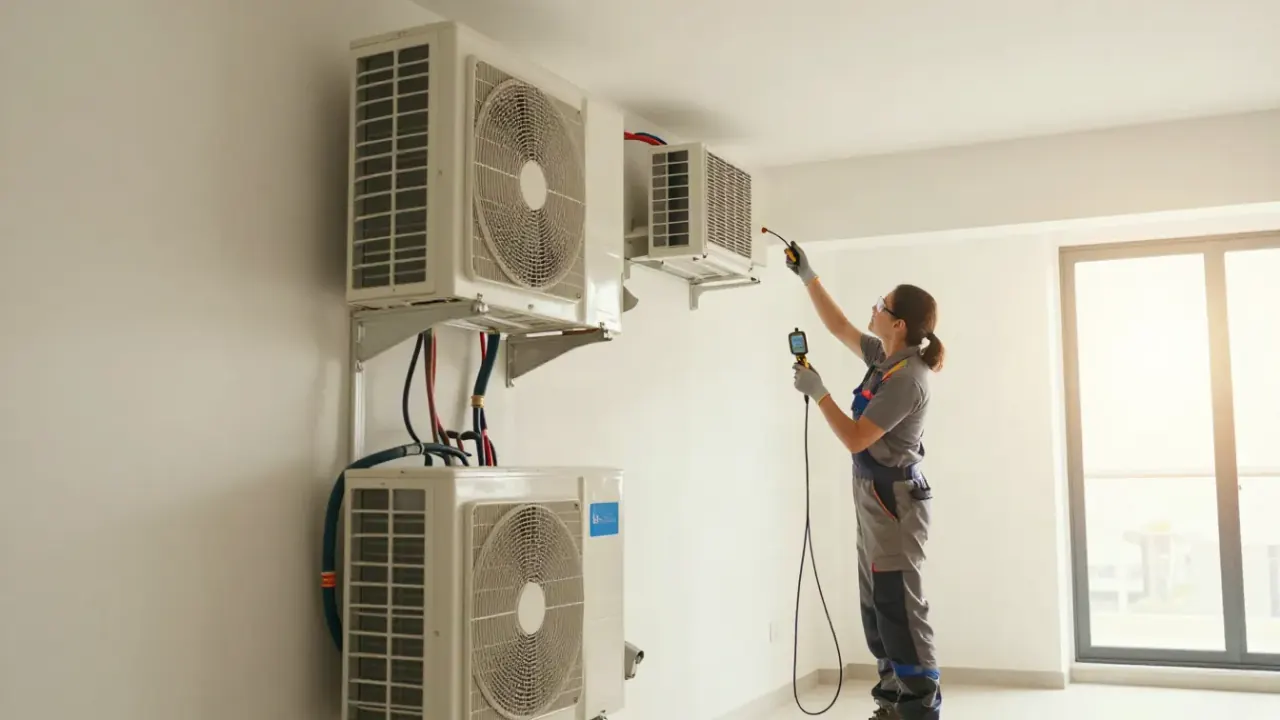
Why Your Mini Split Is Not Cooling in Humid Summers
Rosenberg humidity makes mini splits work harder than the thermostat suggests. Here is why your ductless AC blows warm air and what actually fixes it.
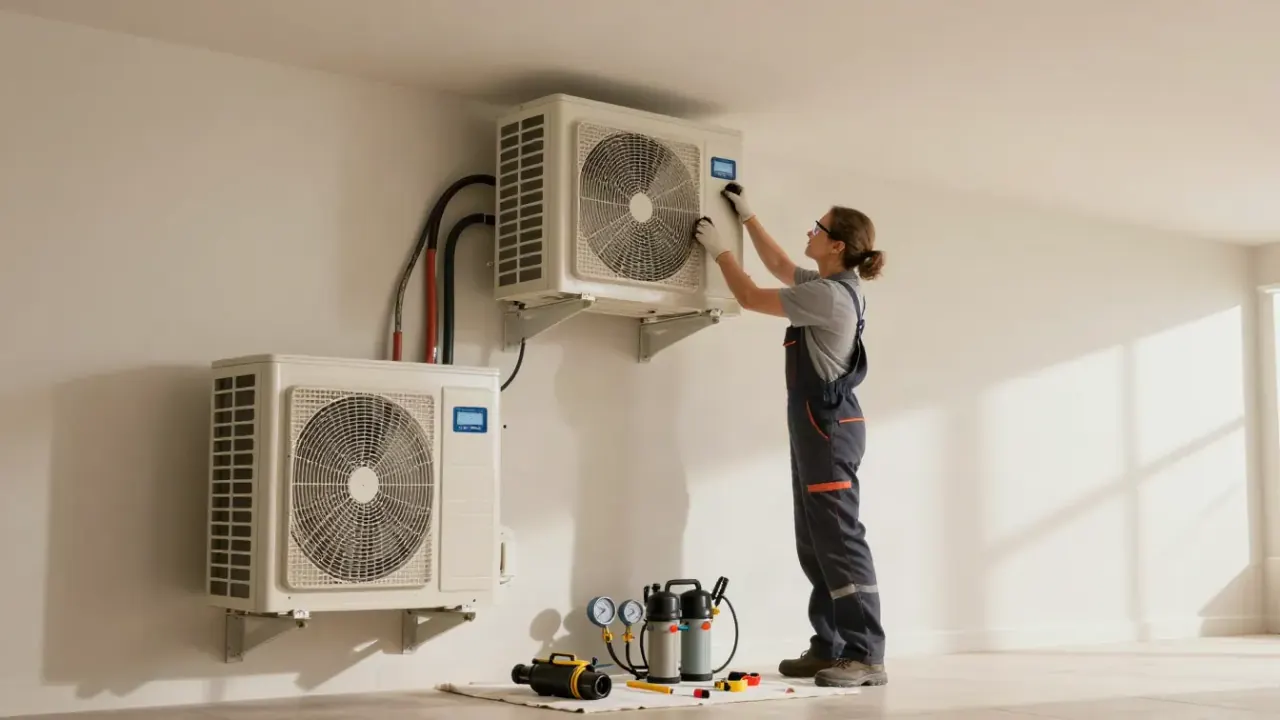
Your mini split is not cooling in humid summers because the indoor coil spends most of its runtime removing water vapor instead of heat, and any small fault - a dirty coil, a slow refrigerant leak, a clogged drain - pushes it past the point where it can do both. In Rosenberg, where July dew points sit in the mid-70s and afternoon humidity regularly runs 70 to 85 percent, a ductless system that was sized for a dry climate is suddenly asked to do 30 percent more work than its rated capacity suggests.
That is the short answer. The longer one involves what humidity actually does to a mini split, which failures show up first on the Gulf Coast, and what you can check yourself before you pay anyone to come out. We run these calls every week across Fort Bend County, and the pattern is consistent enough that we can usually guess the fault before we open the panel.
Humidity Is the Hidden Load on Every Mini Split in Rosenberg
Humidity is a hidden load on every mini split in Rosenberg because latent heat removal - pulling water vapor out of the air - consumes 25 to 40 percent of a ductless system's cooling capacity during a typical Gulf Coast summer. Sensible cooling drops the air temperature. Latent cooling condenses moisture on the evaporator coil and drains it away. Both happen at the same time, and both draw from the same compressor.
A 12,000 BTU wall unit rated for 12,000 BTU of total capacity might only deliver 7,500 to 9,000 BTU of actual temperature drop on a 78°F day with 80 percent relative humidity. The rest goes to wringing water out of the air. That is not a defect. It is physics, and it is why a mini split that felt ice-cold in April feels merely cool by August.
Rosenberg sits in a band where the average July high is 95°F and the overnight low barely drops below 76°F. The system never gets a real break. It runs 14 to 18 hours a day from June through September, and that continuous runtime is what exposes every small weakness in the system.
Why Is My Mini Split Not Cooling in Rosenberg TX Humidity?
Your mini split is not cooling in Rosenberg TX humidity for one of five reasons: the evaporator coil is fouled, the refrigerant charge is low, the condensate drain is clogged and backing up, the outdoor condenser is starved of airflow, or the unit is undersized for the room it serves. Each one produces a slightly different symptom, and each one has a different fix.
Before you assume the worst, check the simple things. A mini split that suddenly stops cooling often has a filter that has not been washed in two months. On a ductless head, that filter is a thin mesh screen behind the front panel. Rinse it in the sink, let it dry, put it back. If the airflow coming out of the louver feels weak even on high fan, the filter is the first suspect.
If the filter is clean and the air is still warm, the problem is mechanical. That is when you want a technician who works on ductless systems every day, not a general HVAC company that treats mini splits as a side job. Our Mini Split Not Cooling Repair Rosenberg TX service exists specifically for this call, and we carry the gauges, leak detectors, and coil cleaners that ductless work requires.
The Five Failures We Find Most on Gulf Coast Ductless Systems
The five failures we find most on Gulf Coast ductless systems are dirty evaporator coils, refrigerant leaks at flare fittings, frozen coils from restricted airflow, clogged condensate drains, and condenser units choked with pollen and grass clippings. Here is what each one looks like in the field.
1. Dirty Evaporator Coil
A dirty evaporator coil is the single most common cause of weak cooling we see in Rosenberg. The coil sits behind the filter, and even with a clean filter, fine dust and biological growth accumulate on the fins over 12 to 18 months. Once the fins are coated, the coil cannot transfer heat efficiently, and the unit runs longer to hit the same setpoint.
Cleaning a ductless coil properly means pulling the blower wheel, flushing the coil with a foaming cleaner, and rinsing it without soaking the electronics. It is a 60 to 90 minute job for one head. Our Mini Split Cleaning and Maintenance Rosenberg TX service covers this, and we recommend it once a year in this climate - twice if you have pets or live near open fields.
2. Refrigerant Leaks at Flare Fittings
Refrigerant leaks at flare fittings are the second most common failure. Mini splits use flare connections at the indoor and outdoor units, and those connections vibrate. Over three to five years, a flare can loosen just enough to lose a few ounces of refrigerant per season. The system still runs. It just never gets cold.
A system that is 10 to 15 percent low on charge might still cool the room to 78°F on a mild day. On a 98°F afternoon in August, it cannot keep up. If your mini split cools at night but not during the day, low refrigerant is a strong candidate. We handle this with Refrigerant Leak Repair and Recharge Rosenberg TX, which includes electronic leak detection and a nitrogen pressure test before we add a single ounce.
3. Frozen Coils From Restricted Airflow
A frozen coil is what happens when the evaporator gets cold enough to freeze the condensation on its surface. Ice insulates the coil, airflow drops to almost nothing, and the unit blows lukewarm air while the outdoor unit runs continuously. You will usually see frost on the indoor coil or water dripping from the head.
Frozen coils are almost always caused by a dirty filter, a failed blower motor, or low refrigerant. Thawing the unit and restarting it without fixing the cause just means it freezes again in a week. Our Frozen Coil and Ice Buildup Repair Rosenberg TX service diagnoses the root cause, not just the ice.
4. Clogged Condensate Drain
A clogged condensate drain is the failure that surprises homeowners most, because the symptom is water, not heat. In high humidity, a mini split can produce 2 to 5 gallons of condensate per day. That water runs through a small drain line to the outside. Algae and dust build up in the line, and eventually it plugs.
When the drain plugs, water backs up into the drain pan and either overflows onto your wall or triggers a float switch that shuts the unit down. If your mini split stopped cooling and there is water on the floor or wall beneath it, the drain is the first thing to check. We clear these with a vacuum and a flush, and we treat the line to slow the regrowth. That is covered under Mini Split Water Leak and Condensate Drain Line Repair Rosenberg TX.
5. Condenser Choked With Debris
The outdoor condenser on a mini split is a small coil with a fan on top. In Rosenberg, it collects cottonwood fluff, grass clippings, and pollen from March through October. When the coil is matted, the system cannot reject heat, and the compressor runs hot and loses capacity.
Rinsing the outdoor coil with a garden hose every 30 to 60 days during mowing season solves most of this. If the coil is packed with debris that a hose will not remove, we pull the fan and clean it from the inside out.
How to Tell a Humidity Problem From a Mechanical One
You can tell a humidity problem from a mechanical one by measuring the air temperature split between the return and the supply. A healthy mini split in Rosenberg should deliver air 16 to 22°F cooler than the air entering the head. If the split is under 12°F, something is wrong with the system, not the weather.
Here is a simple test you can run with any digital thermometer:
- Set the mini split to its lowest temperature and highest fan speed.
- Let it run for 15 minutes without opening doors or windows.
- Hold the thermometer in the air stream coming out of the louver for 60 seconds.
- Then hold it in the air near the return intake on top of the head for 60 seconds.
- Subtract the supply reading from the return reading.
A 16 to 22°F split means the system is working and the room is simply hard to cool. Under 12°F means you have a mechanical fault. Between 12 and 16°F is the gray zone where a dirty coil or a slightly low charge is likely.
One more check: put your hand on the large copper line at the outdoor unit. It should be cold and sweating. If it is warm or only slightly cool, the system is not moving refrigerant the way it should.
Common Mistakes Homeowners Make Before Calling Us
The most expensive mistake homeowners make is adding refrigerant without finding the leak. A recharge without a leak repair buys you six to twelve weeks of cooling and then you are back where you started, minus the cost of the refrigerant.
Other mistakes we see regularly:
- Running the unit with a frozen coil. This forces the compressor to work against ice and can shorten its life by years.
- Setting the thermostat to 60°F to "force" cooling. The system runs continuously, the coil freezes, and the room never gets below 74°F anyway.
- Blocking the outdoor unit with plants or fencing. A mini split condenser needs 12 to 18 inches of clearance on all sides.
- Ignoring a slow water drip. That drip is a drain line telling you it is about to plug completely.
- Using a general handyman for refrigerant work. Ductless systems use small charges measured in ounces, and a few ounces over or under changes performance noticeably.
If you have already tried a filter change and a coil rinse and the air is still warm, stop guessing. A 30-minute diagnostic saves you from replacing parts that were never the problem.
When to Call a Professional
Call a professional when the temperature split is under 12°F, when you see frost on the indoor coil, when the unit trips a breaker, or when you hear the outdoor fan running but the compressor is silent. Those are the four symptoms that almost always point to a repair only a licensed technician can make.
We serve homeowners across Rosenberg and the surrounding communities, including Mini Split Repair in Briarwood Crossing and the newer builds along the Brazos where ductless systems are common. If your mini split is not cooling and you have already ruled out the filter, our team can usually tell you what is wrong within the first 20 minutes on site.
We also handle the less obvious failures - error codes, thermostat communication faults, and multi-zone systems where one head works and another does not. Those calls need a different set of tools than a standard AC repair, and we keep them on the truck.
Frequently Asked Questions
Why is my mini split not cooling in humid Rosenberg TX summers?
Humidity forces your mini split to spend 25 to 40 percent of its capacity removing water vapor instead of heat. If the coil is dirty, the refrigerant is low, or the drain is clogged, the system cannot do both jobs and the air coming out feels warm.
Does humidity affect ductless AC cooling in Texas?
Yes, significantly. Gulf Coast dew points in the mid-70s add a latent load that dry-climate sizing charts ignore. A system that cools a 300 sq ft room in El Paso may struggle in Rosenberg at the same tonnage.
How do I fix a mini split not cooling in Rosenberg humidity?
Start with the filter and the outdoor coil. If both are clean and the air is still warm, measure the temperature split. Under 12°F means a mechanical fault - usually low refrigerant or a frozen coil - and that needs a technician.
Can a mini split keep up with Gulf Coast humidity in Rosenberg?
A properly sized and maintained mini split can hold 74 to 76°F indoors on a 98°F day in Rosenberg. It will run 14 to 18 hours a day doing it. If it cannot hold setpoint, the issue is the system, not the climate.
How often should I clean my mini split in this climate?
Clean the indoor filter every 2 to 4 weeks during cooling season and rinse the outdoor coil every 30 to 60 days. Schedule a professional coil cleaning once a year, or twice if you have pets or live near open fields.
Get Help With Mini Split Repair in Rosenberg
If your mini split is blowing warm air and you have already cleaned the filter, the next step is a proper diagnostic. We work on ductless systems every day in this humidity, and we carry the parts to fix most failures on the first visit.
Call Rosenberg Mini Split Repair at (281) 738-1427 and we will get your cooling back before the next heat advisory.