Focused arrival windows
Useful updates and clear arrival timing.
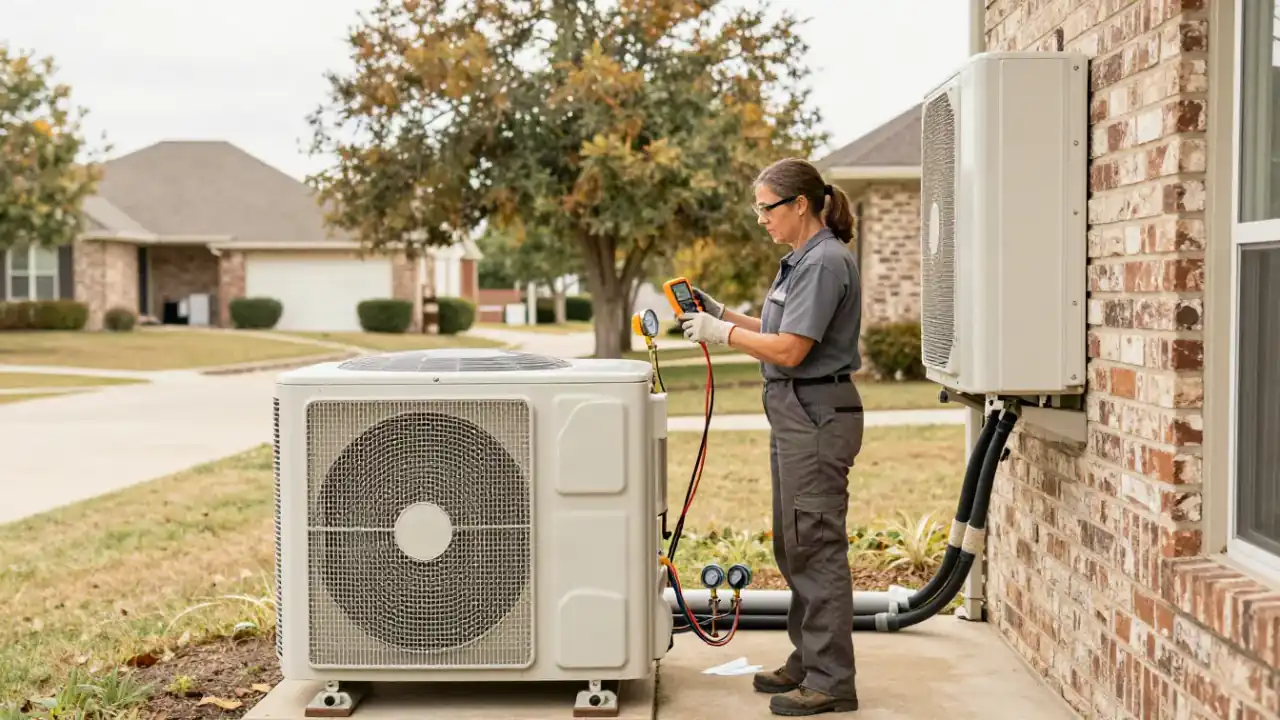
Refrigerant Leak Repair and Recharge Rosenberg TX is what we do every day, and we do it for ductless systems that have stopped cooling. If your mini split is blowing warm air, icing over, or throwing an error code, you have a leak, not a mystery. We pressure-test the line set, repair the flare or coil, pull a deep vacuum, and recharge to the exact factory charge.
Useful updates and clear arrival timing.
Review the approach and price before deciding.
Equipped vehicles and respectful cleanup.
Neighbors serving neighbors with follow-through.
Every leak repair and recharge we do covers the full circuit, not just the visible parts. Here is what is included in a standard visit, and what we quote separately if your system needs it.
We recover remaining refrigerant, pressurize the line set with dry nitrogen to 300 to 400 psi, and use an electronic leak detector plus soap solution to pinpoint the leak. This covers flare fittings, Schrader ports, brazed joints, and coil surfaces.
Flare fittings get cut, re-flared, and torqued to the manufacturer's spec with a torque wrench. We replace Schrader cores, damaged pipe insulation, and any flare nuts that show galling. Coil leaks get brazed when the coil is serviceable.
We pull the system below 500 microns with a vacuum pump and hold it for 15 minutes with a micron gauge attached. If it will not hold, there is still moisture or a leak, and we keep working until it does. No shortcuts here.
We weigh in R-410A or R-32 by the ounce to the exact charge listed on your unit's data plate. No charging by pressure gauge alone, no guessing. You get the weight and the final pressure readings written on your invoice.
We clear the condensate drain line, add drain pan tablets to keep it clean, and wash or replace the air filters. Low charge causes ice, ice causes water, and we want that whole chain handled before we leave your home.
We run the system for 20 to 30 minutes and measure the temperature split between return and supply air. You should see 16 to 22 degrees. We show you the numbers and confirm the unit holds temperature before we pack up.
Share what is happening and receive a clear next step from the local team.
Refrigerant Leak Repair and Recharge Rosenberg TX is the process of locating a refrigerant loss in a ductless system, repairing the failed joint or coil, and restoring the correct charge so the unit cools like it did on day one. We start with a manifold gauge set and a nitrogen regulator to pressurize the line set, then use an electronic leak detector and micron gauge to confirm the exact leak point. Once we find it, we repair the flare fitting or braze the coil, pull the system down to 500 microns, and weigh in R-410A or R-32 refrigerant to the manufacturer's spec.
Rosenberg summers run hot and long, and your mini split runs harder here than it would almost anywhere else in Texas. That constant pressure cycling is what opens up flare fittings and wears down coils over time. When a system loses charge, the compressor overheats, the evaporator coil freezes, and you get water on the floor from a clogged condensate drain line. If you have been searching for mini split refrigerant leak repair near me in Rosenberg, this is the page. We handle ductless AC Freon leak repair in Rosenberg, Texas for single-zone and multi-zone systems alike.
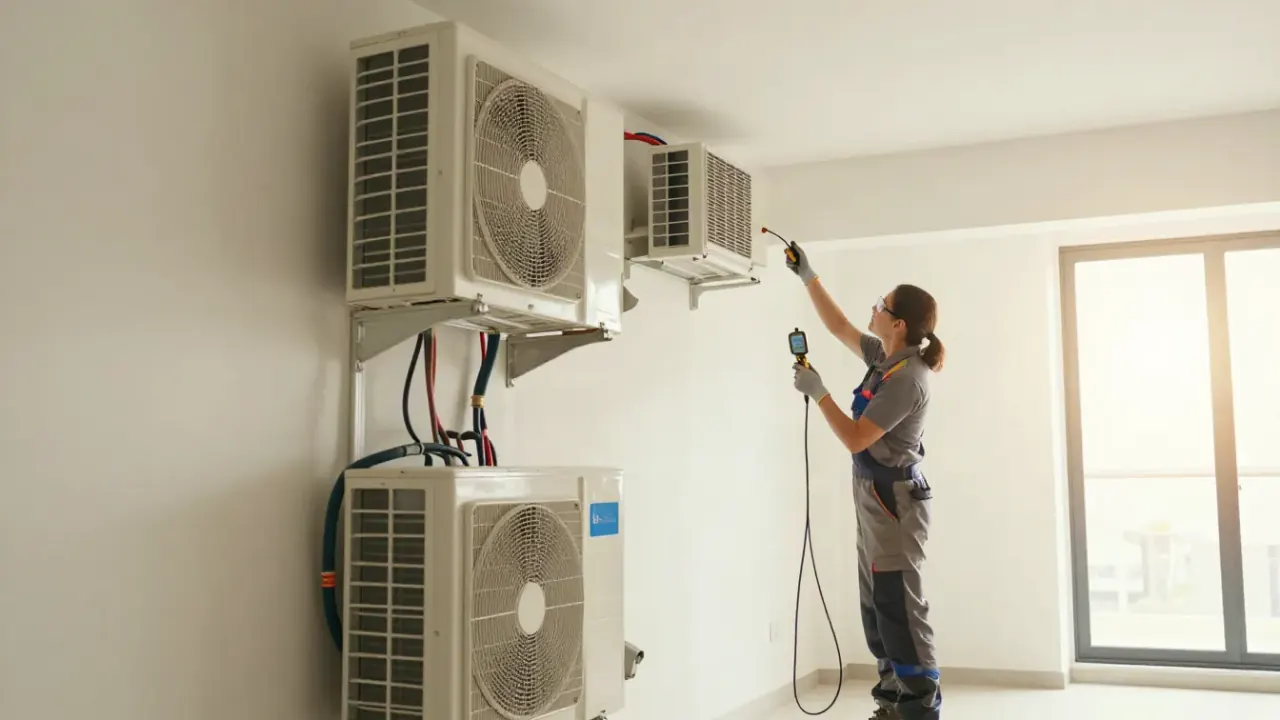
We connect a manifold gauge set and a clamp meter to read suction and liquid pressures against outdoor ambient temperature. Low suction pressure with a high superheat reading confirms a charge loss. We also check capacitors and the error code history on the board. This takes about 30 minutes and tells us whether you have a leak or a different fault.
We recover the remaining refrigerant with a recovery machine, then pressurize the line set with dry nitrogen to 300 to 400 psi. An electronic leak detector and soap solution pinpoint the leak, usually at a flare fitting, a Schrader port, or a rubbed-through coil. Most leaks show up within 20 minutes of pressurization.
Flare fittings get cut, re-flared, and torqued to the manufacturer's spec with a torque wrench. Coil leaks get brazed or, when the coil is too far gone, the coil gets replaced. We replace the Schrader cores and any damaged pipe insulation while we are in there. This step is where the repair either lasts or does not.
We pull a deep vacuum with a vacuum pump and hold it under 500 microns for 15 minutes to boil off moisture. Then we weigh in R-410A or R-32 refrigerant by the ounce to the exact charge on the unit's data plate. No guessing by pressure, no topping off by feel.
We run the system for 20 to 30 minutes and measure the temperature split between return and supply air. A healthy mini split delivers 16 to 22 degrees of split. We check for ice on the coil, confirm the condensate drain line flows, and clean the air filters before we pack up. You see the numbers before we leave.
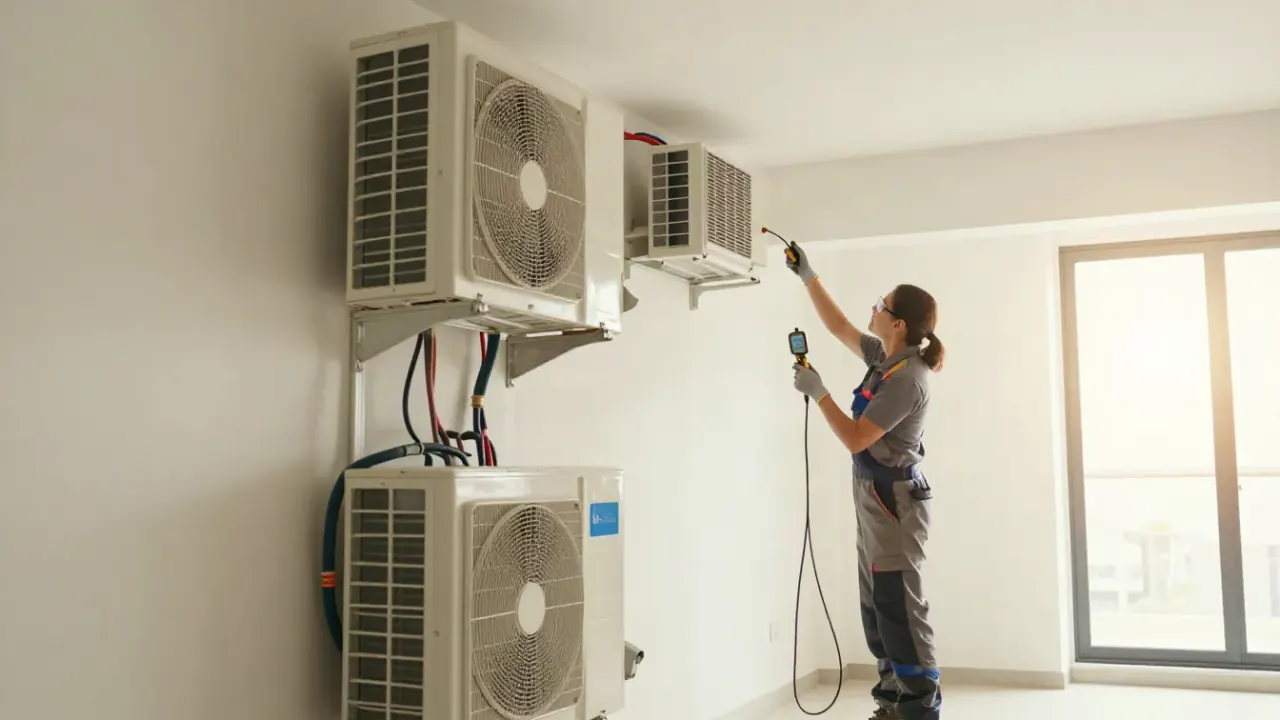
Reads suction and liquid line pressures so we can calculate superheat and subcooling and confirm whether the system is actually low on charge.
Pulls the system below 500 microns and holds it there to boil off moisture. The micron gauge reading is the proof that the circuit is dry and sealed.
Pressurizes the line set to 300 to 400 psi for leak testing. Nitrogen is dry and inert, so it will not introduce moisture or react with the refrigerant.
Sniffs out refrigerant traces at flare fittings, Schrader ports, and coil surfaces. It finds leaks that soap bubbles alone will miss.
Recovers the remaining charge before we open the circuit, which is required by EPA rules and keeps refrigerant out of the atmosphere.
Tightens flare nuts to the manufacturer's inch-pound spec. Hand-tightened flares are the number one cause of leaks we repair.
Reads compressor amp draw so we can tell whether a failing compressor is contributing to the problem or is a symptom of the low charge.
We pressurize the isolated circuit with dry nitrogen and watch the gauge for 15 to 30 minutes. A pressure drop confirms a leak and tells us whether it is in the line set, the indoor coil, or the outdoor unit.
After the repair, we pull a vacuum and hold it below 500 microns for 15 minutes. If the reading climbs, moisture or a leak remains, and we do not charge the system until it passes. This is the step most quick-recharge companies skip.
We charge by weight to the exact spec on the unit's data plate, using a refrigerant scale. Pressure-only charging leaves systems over or undercharged, and both shorten compressor life.
We recover all refrigerant before opening the circuit, following federal handling rules. This protects the environment and keeps the job compliant with EPA requirements.
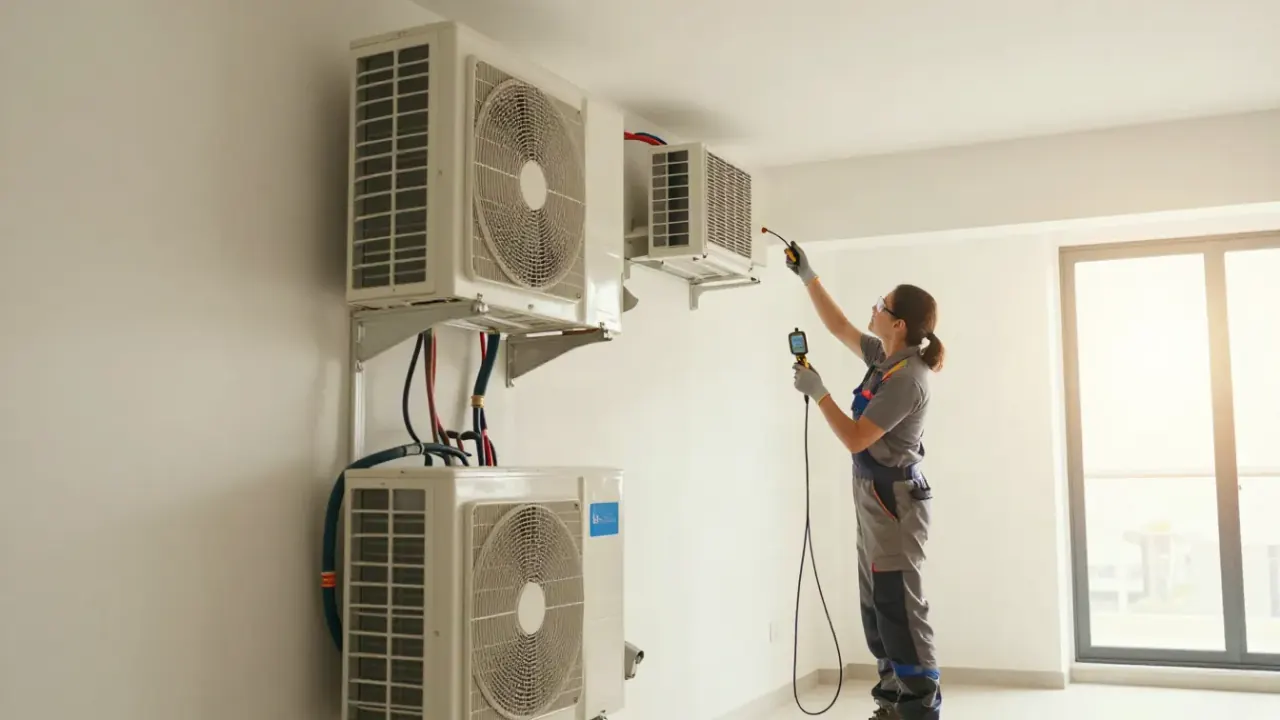
We recover the charge, pressure test with nitrogen, and find the leak, usually at a flare fitting or the coil. We repair it, pull a deep vacuum with a micron gauge, and weigh in the correct charge for your unit. You get 16 to 22 degrees of temperature split back and the room hits its set point within an hour of us finishing.
Repeated top-offs mean an unrepaired leak. We do a full pressure test, locate the leak point, repair it, and recharge to the data plate spec so you are not paying for refrigerant every season. The system holds its charge, and you stop the cycle of $200 to $400 top-offs every summer.
We thaw the frozen coil, repair the leak causing the low pressure, clear the clogged condensate drain line, and add drain pan tablets. We also check the air filters and clean them if needed. The tenant gets cooling back, the water stops, and you avoid a ceiling repair and a compressor replacement.
We pull the error code history, check pressures with a manifold gauge set, and confirm whether the fault is a leak or a sensor issue. If it is a leak, we repair and recharge it. If it is not, we tell you what it actually is. You get the right repair the first time instead of paying for a recharge that does not solve the problem.
Rosenberg sits in Fort Bend County where summer highs push past 95 degrees for weeks and the cooling season runs from April into October. That kind of runtime is brutal on ductless systems. The pressure swings between a 100-degree afternoon and a 78-degree night work flare fittings loose over time, and that is where most of the leaks we find start. Homes in Briarwood Crossing and Kingdom Heights tend to have newer construction with line sets run through attic spaces that hit 130 degrees in August, which accelerates insulation breakdown on the suction line. Older homes near Fairpark Village often have original flare connections that have never been re-torqued. We handle Rosenberg TX mini split AC recharge service for both, and we size the charge to the actual line length, not a generic chart. If you need ductless AC Freon leak repair in Rosenberg, Texas, we carry the fittings and refrigerant to finish it in one trip.
Newer construction with long attic line set runs. We see flare leaks where the line set enters the indoor head, especially on west-facing walls that bake all afternoon.
Mix of single-zone and multi-zone systems. Multi-zone branch box connections are a common leak point here, and we test each zone circuit separately.
Older housing stock with ductless systems added later. Original flare fittings that have never been re-torqued are the first thing we check on a low-charge call.
Larger homes running multi-zone Mitsubishi and Daikin systems. When one zone loses charge, the branch box or a single flare joint is usually the cause.
Long compressor runtimes and high head pressures stress flare fittings and coil joints. Leaks that would stay slow in a milder climate open up faster here.
Suction line insulation breaks down in the heat, and exposed copper sweats and corrodes. We replace damaged pipe insulation during every leak repair.
Condensate drain lines clog faster, and a low-charge system freezes the coil and overwhelms the drain pan. We clear the drain and add pan tablets on every recharge call.
Minor foundation movement can stress line sets run through slabs or tight chases, which opens brazed joints over time. We pressure test the full circuit, not just the accessible fittings.
A 2-ton Daikin in The Oaks of Rosenberg was icing over every afternoon and blowing warm air by evening. The homeowner had paid for two top-offs in 18 months. Suction pressure read 85 psi, well below spec, and the indoor coil was a solid block of ice.
We recovered the charge, found a leaking flare at the indoor head, cut and re-flared it, and pulled the system to 420 microns. After weighing in 4.2 pounds of R-410A, the temperature split measured 21 degrees. The system has held charge for two cooling seasons.
Maintenance: We set the homeowner up on annual coil cleaning and a pressure check each spring. Catching a slow leak at the annual visit costs far less than a mid-August emergency call.
A four-zone Mitsubishi system in Kingdom Heights had one bedroom zone that would not cool. The other three zones ran fine, so the homeowner assumed it was a thermostat issue. Pressures on the failed zone read 60 psi suction with high superheat.
We isolated the circuit, found a leaking flare at the branch box, repaired it, and recharged that zone only. The other three zones stayed sealed and untouched. The bedroom hit 72 degrees within 40 minutes of the repair, and the homeowner avoided a full-system evacuation.
Maintenance: We recommended a spring pressure check on all four zones so a slow leak gets caught before it strands a room in July.
A rental property in Fairpark Village had a mini split running 14 hours a day without hitting set point. The tenant reported a hissing sound at the outdoor unit. Amp draw on the compressor was climbing and the unit was short-cycling on high pressure.
We found a leaking Schrader port, replaced the core, repaired the flare connection, and recharged to spec. Compressor amp draw dropped back to the nameplate rating and the unit held temperature. The landlord avoided a $1,600 compressor replacement.
Maintenance: We added the property to a twice-a-year maintenance schedule with filter changes and pressure checks, which keeps the system off the emergency call list.
Refrigerant leaks do not stay small. Here are the problems we see most often on Rosenberg ductless systems and what happens if they are left alone.
The system runs nonstop without cooling, your electric bill climbs, and the compressor overheats while trying to make up the difference. Left alone, the compressor fails and you are looking at a $1,200 to $2,000 replacement. We pressure test the circuit, find the leak, repair it, and recharge to spec. Most warm-air calls are resolved the same day, and you get cold air back within a few hours of our arrival.
Ice blocks airflow, insulates the coil, and eventually melts into the drain pan faster than the drain line can carry it away. That water ends up on your ceiling or floor, and the frozen coil can crack. We thaw the coil, repair the leak causing the low pressure, recharge the system, and clear the condensate drain line. We also add drain pan tablets so the pan stays clean between visits.
That sound is refrigerant escaping under pressure. A slow leak can drain a system over a few months, and a fast one can empty it in days. Either way, the system loses capacity and the compressor takes the damage. We leak-test every flare joint with an electronic detector and soap solution, then cut and re-flare the failed connection with new fittings torqued to spec. The hissing stops and the charge holds.
The other zones keep running, so the problem is easy to ignore until the failed zone's compressor overheats or the branch box leaks into the ceiling. Multi-zone leaks rarely fix themselves. We isolate the failed circuit, test the branch box and flare joints, repair the leak, and recharge that zone only. The working zones stay untouched and you avoid a full-system evacuation.
$350 - $900 depending on leak location, refrigerant type, and system size
Typical 2026 pricing in the Rosenberg area runs $350 to $900 for a full leak repair and recharge, depending on where the leak is and how much refrigerant the system takes. Leak detection alone runs $125 to $200 if you want us to diagnose before committing to the repair. A simple flare fitting repair with a recharge sits at the low end. A coil replacement or a leak inside a finished wall pushes toward the top. We quote the full job before we start, and if the repair is simpler than expected, the price drops. If you have been pricing a ductless AC refrigerant recharge Rosenberg Texas, ask us for the full repair number, because a recharge without a repair is money you will spend again next summer.
A repair and recharge at these prices protects a system that would cost $3,000 to $6,000 to replace. Fixing the leak instead of topping off means you stop paying for refrigerant every season and you stop risking a compressor failure.
A flare fitting at the indoor head is a quick repair. A leak inside a finished wall, under a slab, or in a coil that needs replacement takes more labor and more time. Location drives most of the price difference.
R-410A and R-32 are priced differently, and a 3-zone system holds far more charge than a single-zone unit. We charge by the ounce to the data plate spec, so you pay for what the system actually needs.
A single-zone 9,000 BTU head takes less time and less refrigerant than a 36,000 BTU multi-zone system. Multi-zone jobs also require isolating and testing each circuit, which adds diagnostic time.
If the leak has already damaged the coil or the compressor has been running hot, the repair scope grows. We check amp draw and coil condition during diagnosis so you know the full picture before we quote.
Systems with line sets run through tight chases, attics, or walls take longer to pressure test and repair. Easy-access outdoor connections keep the labor hours down.
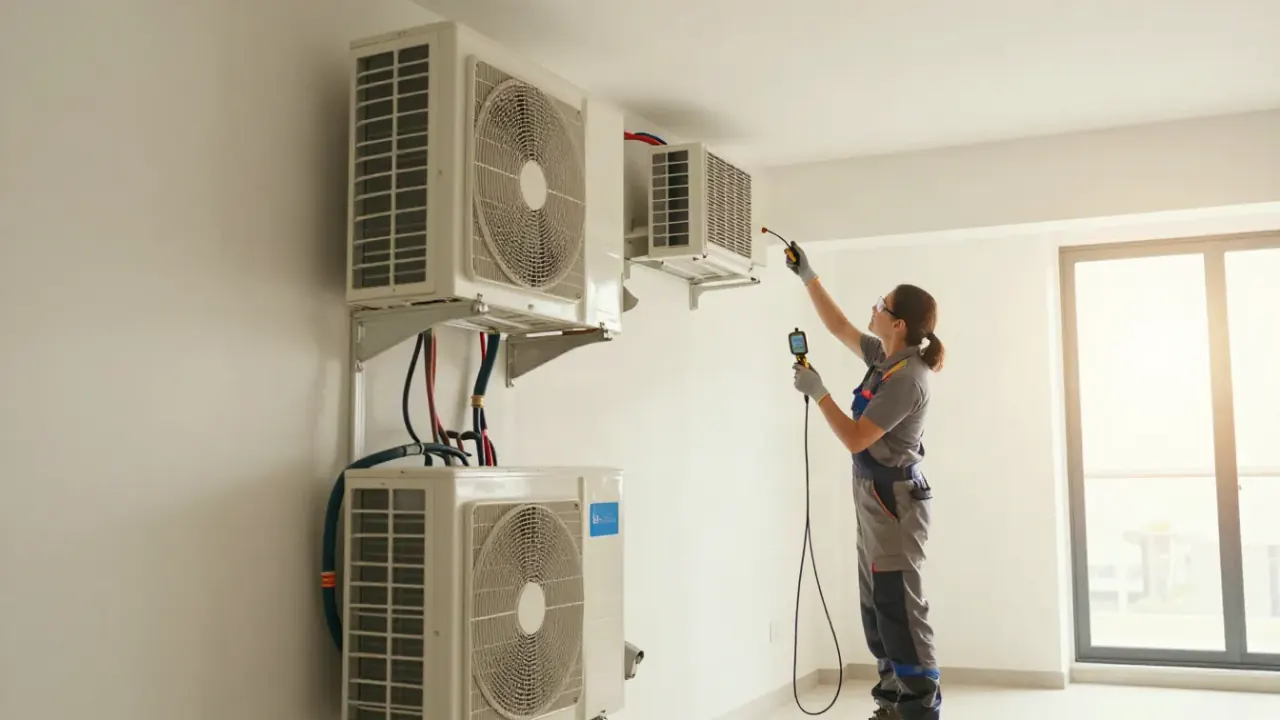
Handling refrigerant is regulated work, and we do it by the book. Every technician on our team holds EPA Section 608 certification, which is required by federal law to purchase, recover, and charge refrigerant. We also carry NATE certification and hold a Texas HVAC contractor license through TDLR. Our techs train on Mitsubishi Electric, Daikin, Fujitsu, LG, and Samsung ductless platforms, so we know the flare torque specs and charge weights for your specific unit. We follow AHRI charging standards and OSHA safety practices on every job.
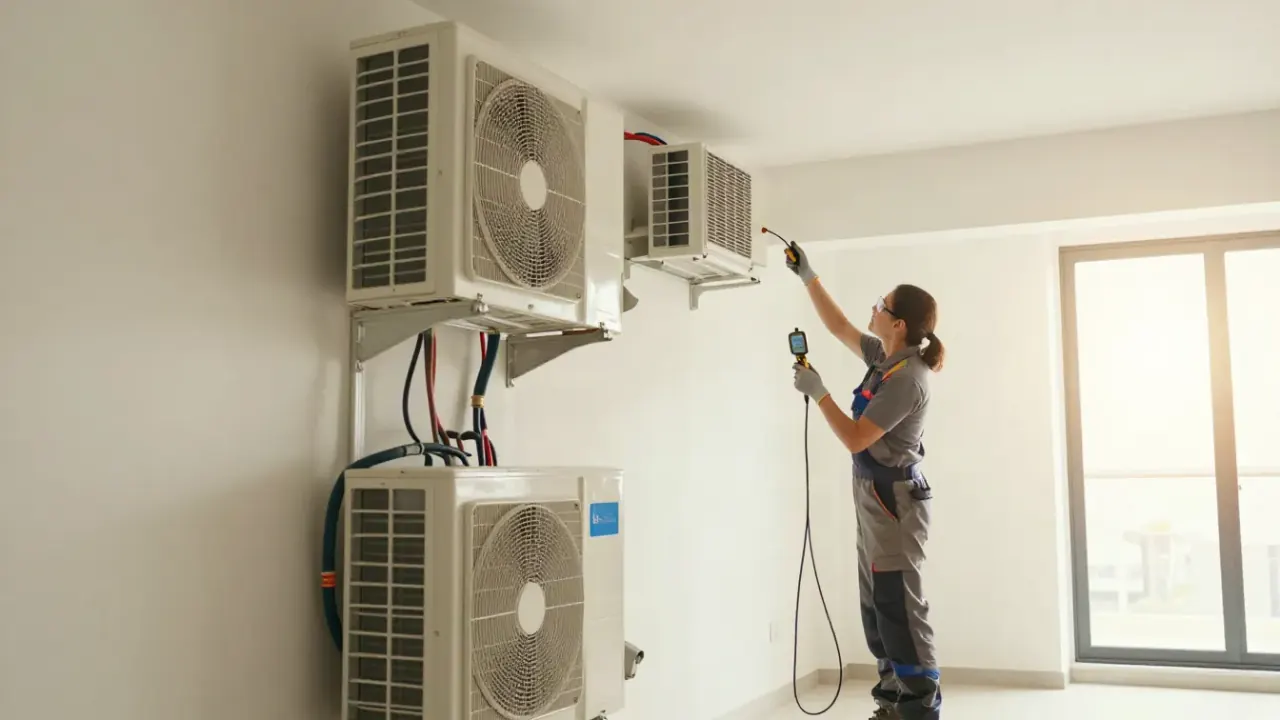
My Daikin stopped cooling in July and the indoor head was covered in ice. They came out the same afternoon, found a leaking flare fitting behind the unit, cut and re-flared it, and recharged the system. Temperature split was 20 degrees when they left. That was two summers ago and it is still holding charge.
Two other companies told me I needed a whole new system. These guys pressure tested with nitrogen, found a pinhole in the coil, and brazed it. Total bill was under $700 and my Mitsubishi cools better than it has in years. They showed me the micron gauge reading before they charged it.
I manage six rental units with ductless systems and one zone kept losing charge. They isolated the branch box leak, repaired it, and recharged just that circuit without touching the other zones. Fast, clean work, and they texted me the pressure readings afterward. I use them for all my mini split calls now.
Most residential mini split leak repairs in Rosenberg run $350 to $900 in 2026, including leak detection, the repair itself, and a full recharge. A simple flare fitting repair sits at the low end. A coil replacement or a hard-to-reach line set leak pushes toward the top. The recharge alone, if the leak is already fixed, runs $150 to $300 depending on system size and refrigerant type.
Four signs show up almost every time: warm air from the indoor head, ice forming on the evaporator coil or the copper line, a hissing or bubbling sound at the flare connections, and a system that runs constantly without hitting the set temperature. If you see ice and water dripping indoors, shut the unit off and call us. Running a frozen coil can damage the compressor.
Yes, in most cases. We stock R-410A and R-32 on the truck and carry common flare fittings and Schrader cores. A straightforward leak repair and recharge takes two to four hours. If the leak is inside a wall or requires a coil replacement, we may need to schedule a return visit, and we tell you that upfront before we start.
A sealed ductless system never needs refrigerant added. If yours is low, it has a leak, full stop. In Rosenberg, the most common leak points are flare fittings that loosen from summer pressure cycling and coil rub-through from vibration. Once we repair the leak and verify the vacuum, the system should hold its charge for years, not months.
Not seeing your question? Our local team can help you understand urgency, scheduling and what to expect.
Ask the local team
A mini split that runs but will not cool is usually low on charge or has a failed capacitor. We diagnose both, and if the cause is a refrigerant leak, we repair and recharge it on the same visit so you get cold air back the same day.
View service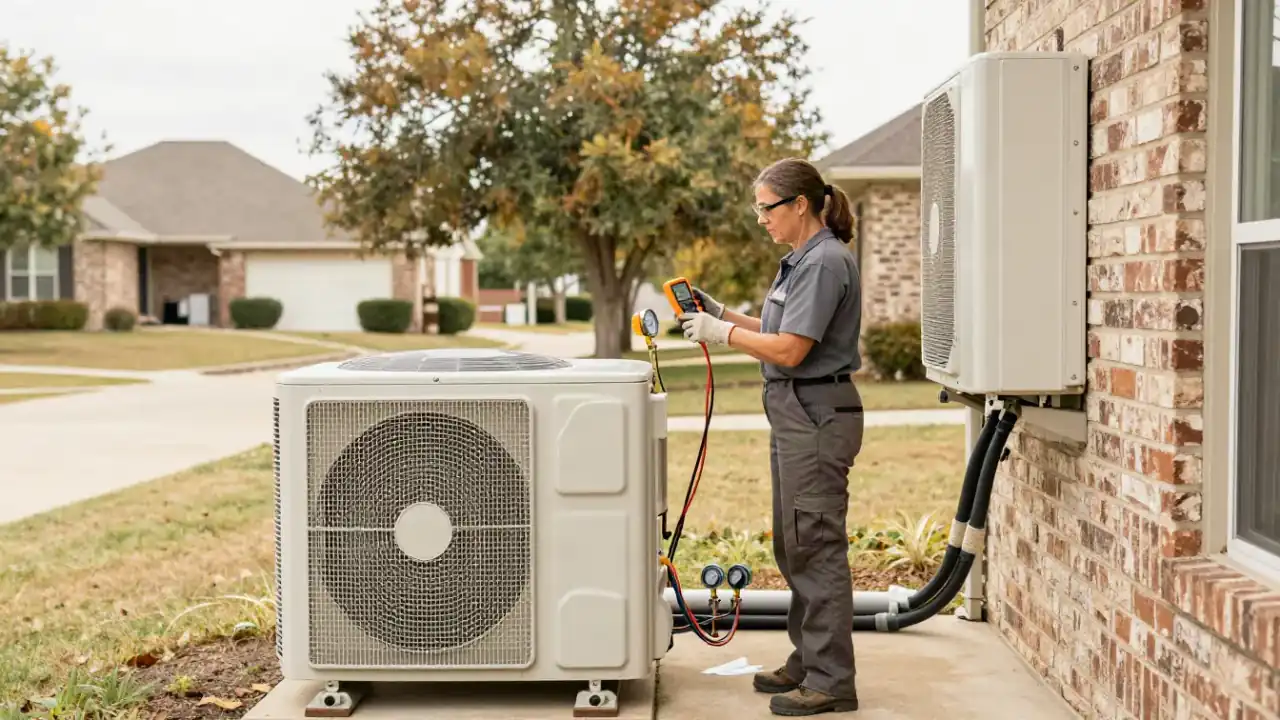
Heat mode failures often trace back to low refrigerant or a reversing valve issue. We check the charge first, because a system that is low in cooling season will fail in heating season too. Repairing the leak restores both modes.
View service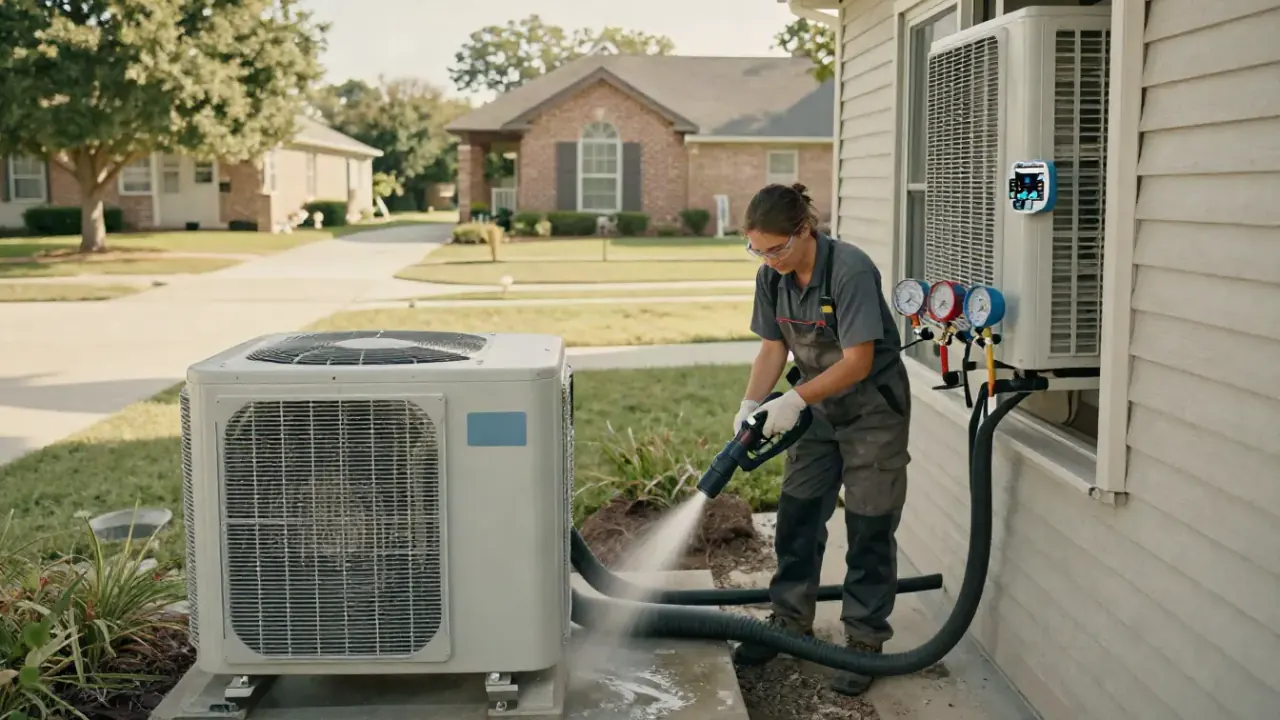
Ice on the evaporator coil is the number one symptom of a refrigerant leak. We thaw the coil, find the leak, repair it, and recharge to spec. We also clear the condensate drain line so the meltwater does not end up on your floor.
View service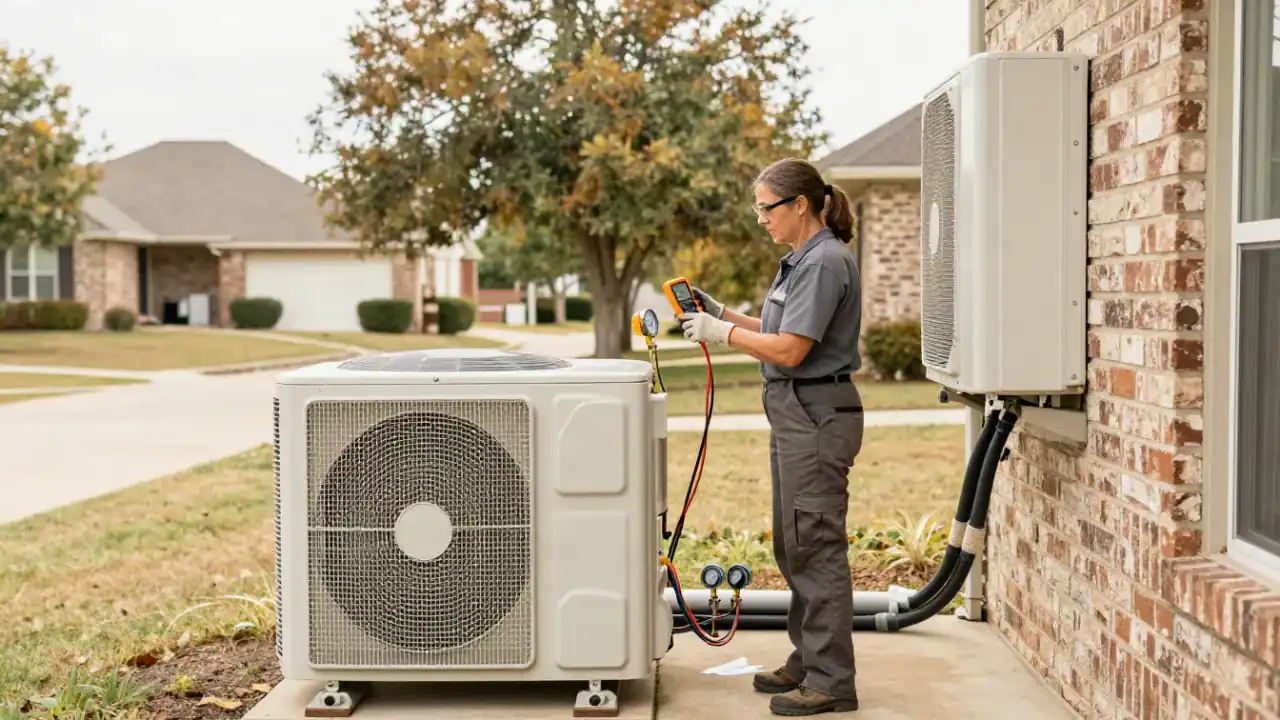
Many ductless brands throw a specific error code when charge is low or the coil sensor reads wrong. We pull the code history from the board, cross-reference it with pressure and temperature readings, and confirm whether a leak is the real cause before quoting a repair.
View service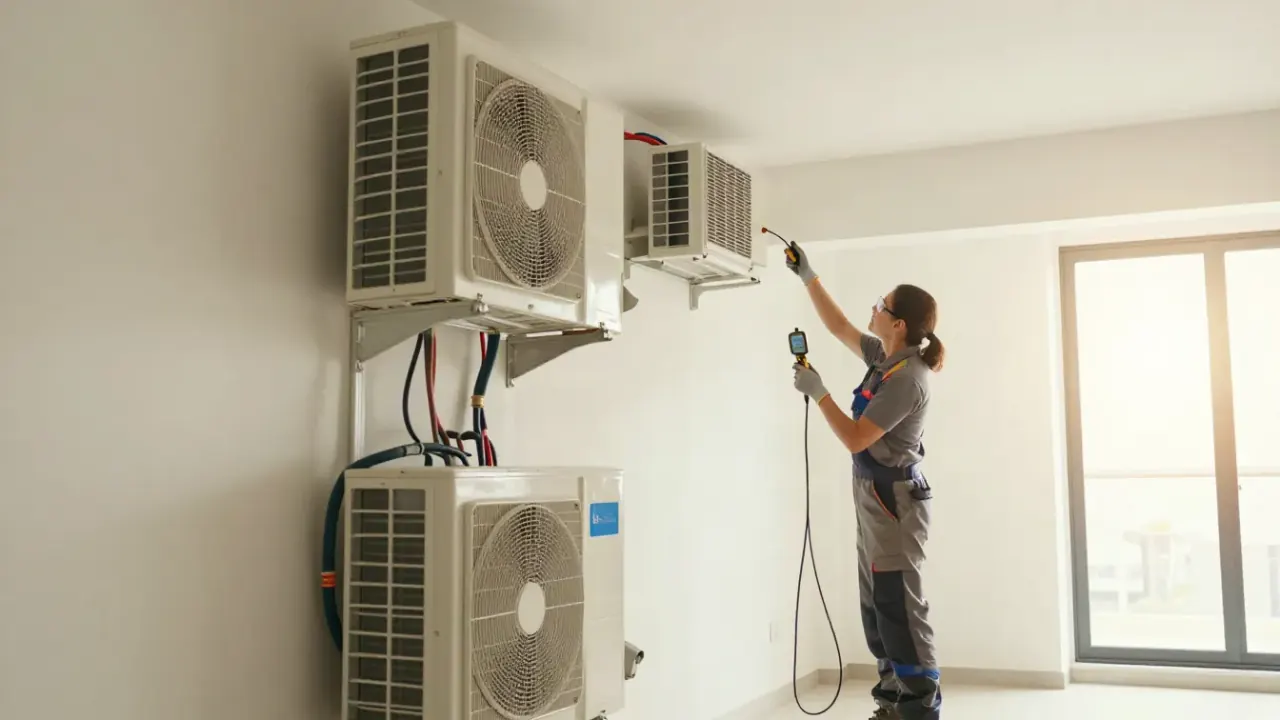
Call (281) 738-1427 or send us a message and we'll get back to you fast. We're open Monday through Friday, 8am to 6pm, and we take emergency calls for no-cool situations. If your unit quit on a weekend, leave a message and we'll call you back first thing.