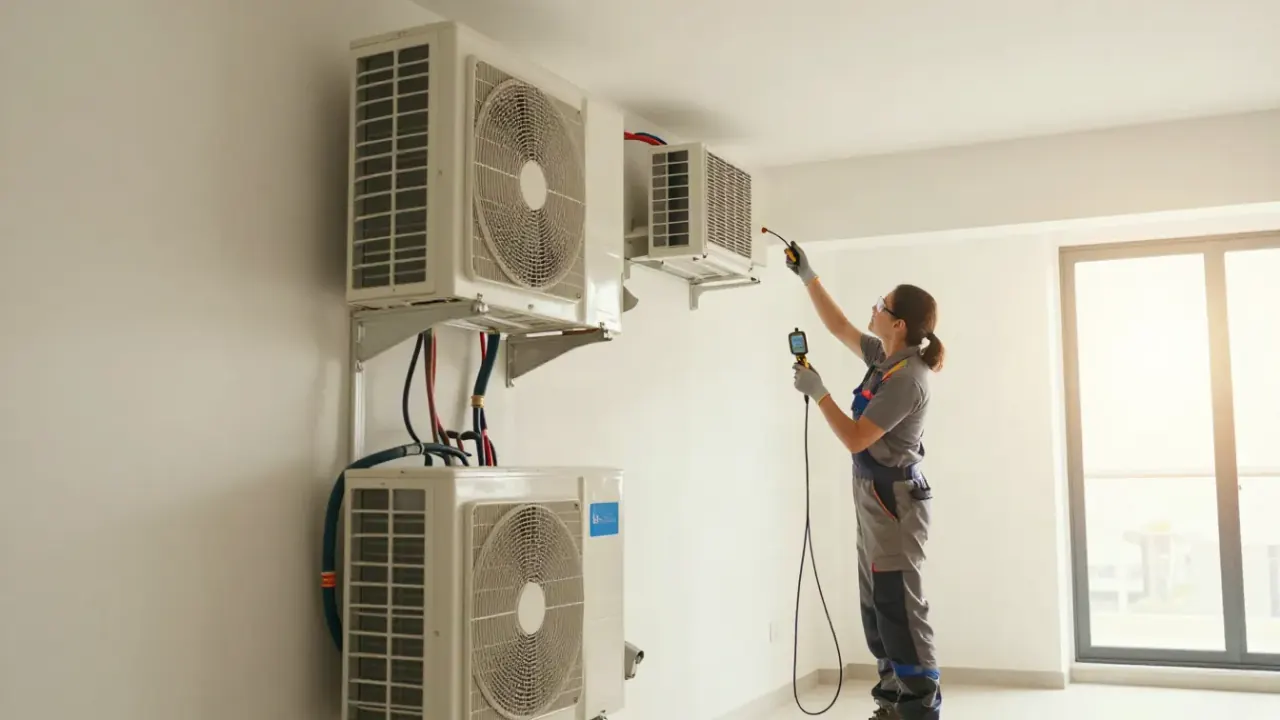
Mini Split Maintenance Checklist for the Gulf Coast
A Gulf Coast mini split maintenance checklist built for Rosenberg humidity: monthly filter rinses, quarterly coil checks, and the annual service that prevents mold and ice.
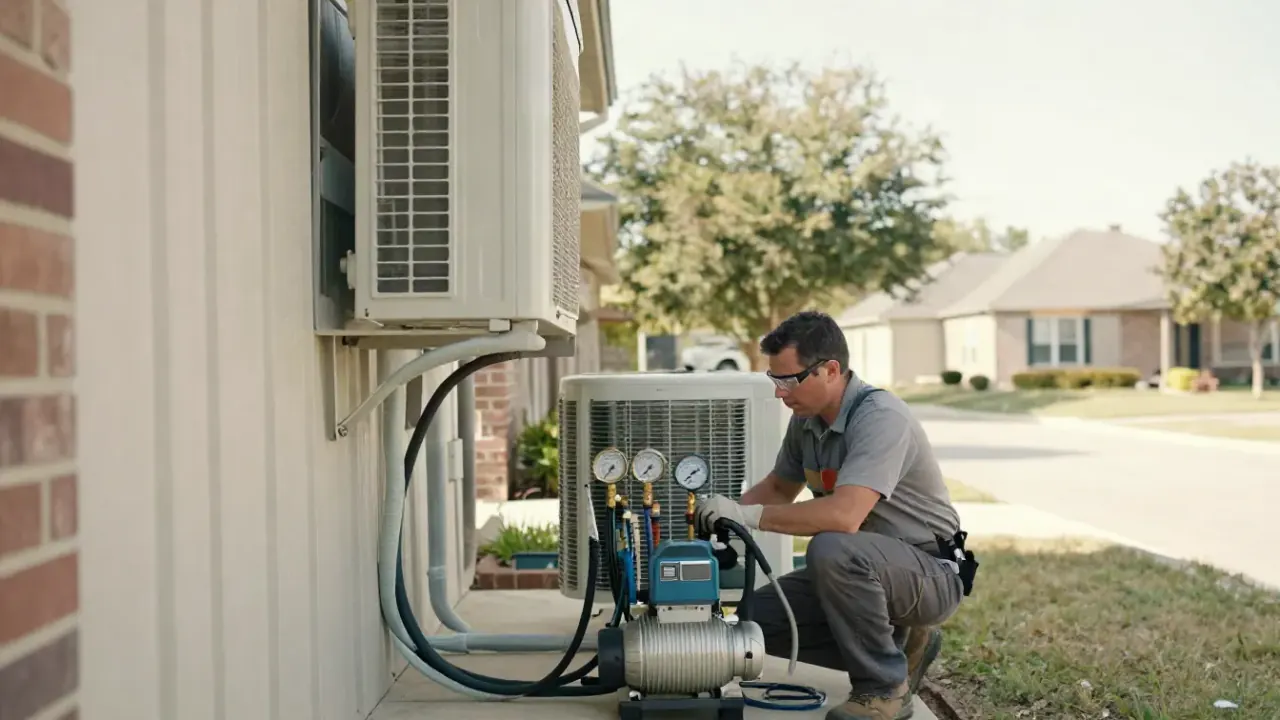
A mini split maintenance checklist for the Gulf Coast has to fight three things most of the country never deals with: 80% average summer humidity, salt-heavy air blowing in off the coast, and a cooling season that runs from April through October. If you do nothing else, rinse the indoor filter every two to four weeks and have the coil and drain line professionally cleaned once a year. That single habit prevents most of the mold, ice, and water damage we get called out to fix.
We run a ductless AC repair Rosenberg TX shop, so we see what actually fails on these systems in Fort Bend County. Below is the exact checklist we hand to homeowners, broken into monthly, quarterly, and annual tasks, plus the mistakes that cost people the most money.
Why Gulf Coast Humidity Is Hard on Mini Splits
Gulf Coast humidity is hard on mini splits because a ductless head pulls 15 to 20 gallons of water out of your indoor air every day during a Rosenberg summer. That water has to leave through a 5/8-inch condensate line, and when it does not, it backs up into your wall or drips down your sheetrock.
The indoor coil stays wet almost constantly from May through September. Wet aluminum plus warm air plus dust equals biological growth. That is why a system that ran clean in Amarillo for six years can smell like a wet towel in Rosenberg by year two.
Salt air adds a second problem. If you live anywhere from Richmond down toward the coast, the outdoor condenser fins corrode faster than inland units. We see pitting on condenser coils at four to six years old in neighborhoods closer to the bay, versus eight to ten years for the same equipment in Needville.
And then there is run time. A Rosenberg mini split runs 2,000 to 2,800 hours a year. A unit in Denver runs closer to 900. Every hour of run time is an hour of filter loading, coil wetting, and drain line slime buildup.
If you want the full picture of what we do on these systems, our mini split maintenance Rosenberg Texas page covers the deep-clean process step by step.
The Monthly Mini Split Maintenance Checklist
Monthly maintenance on a Gulf Coast mini split takes about 15 minutes and costs nothing. Do these four things and you will avoid the majority of service calls.
- Rinse the indoor filter. Pull the filter, run lukewarm water through the back side, and let it air dry completely before reinstalling. Never put a wet filter back in the head.
- Wipe the front panel and louvers. A damp microfiber cloth is enough. Skip the spray cleaners, they leave residue that traps dust.
- Look at the drain line exit. Find where the condensate line terminates outside. If you see standing water or algae, the line is starting to clog.
- Listen to the head for 30 seconds. A new rattle, a gurgle, or a clicking sound is early warning. Catch it now and you avoid a compressor problem later.
During peak pollen in March and April, rinse the filter weekly instead of monthly. Rosenberg sits in a heavy oak and pecan pollen corridor, and those fine particles pack a filter fast.
The Quarterly Ductless AC Maintenance Checklist
Every three months, go a little deeper. This is the ductless AC maintenance checklist Texas Gulf Coast homeowners should run in January, April, July, and October.
- Inspect the outdoor condenser fins. Rinse them from the inside out with a garden hose on low pressure. Bent or crushed fins block airflow and drive up your electric bill.
- Clear the two-foot zone around the condenser. Grass, mulch, and shrubs within 24 inches of the unit cut its efficiency by 10 to 15%.
- Check the condensate drain pan. Pull the cover on the indoor head if your model allows it. Standing water in the pan means the line is partially blocked.
- Test the remote and thermostat. Change batteries once a year whether they need it or not. We get calls every summer from homeowners convinced their system died when the remote just needed two AAAs.
- Look at the flare connections. A tiny oil sheen at a flare nut is the first sign of a refrigerant leak. Wipe it with a white paper towel and check for yellow staining.
If you spot oil at a connection, do not tighten it yourself. Over-torquing a flare is how a $200 repair becomes a $1,400 one. Our Refrigerant Leak Repair and Recharge Rosenberg TX team uses an electronic leak detector and nitrogen pressure test to find the exact source before we touch anything.
The Annual Mini Split Service Checklist
Once a year, before the cooling season starts in April, book a professional service. This is the visit that pays for itself. Typical 2026 pricing in the Rosenberg area runs $150 to $280 per indoor head for a full tune-up, and $95 to $150 for each additional head on a multi-zone system.
Here is what a real annual service includes, in order:
- Coil cleaning. The evaporator coil gets a foaming cleaner and a low-pressure rinse. This is the step that eliminates the musty smell and restores cooling capacity.
- Drain line flush. We blow the line with nitrogen, then flush it with water and a mild biocide to kill the slime that grows in Gulf Coast humidity.
- Blower wheel cleaning. A dirty blower wheel cuts airflow by 20 to 30% and is the number one hidden cause of a frozen coil.
- Refrigerant charge check. We compare subcooling and superheat against the manufacturer spec. A system that is 10% low on charge loses about 5% of its capacity.
- Electrical check. Capacitor readings, amp draw on the compressor, and torque on all terminal connections.
- Condensate pump test if your system has one. Pumps fail silently and flood ceilings.
If your system throws a code during the season, do not guess at it. Our Mini Split Error Code Diagnostics Rosenberg TX service reads the fault history and tells you exactly which component is failing.
What Mini Split Maintenance Is Needed in Rosenberg Humidity?
Rosenberg humidity demands three things most generic checklists skip: monthly filter service instead of quarterly, an annual biocide flush of the condensate line, and a coil inspection every six months rather than once a year.
Here is why. Our average relative humidity from June through September sits between 72% and 82%. That is enough moisture to grow visible biological film on a wet coil in under 90 days. In drier climates the same coil stays clean for a year.
We also recommend a slightly different thermostat strategy here. Keep the fan on low or auto, not high, during the humid months. Running the fan on high pushes air across the coil too fast to dehumidify properly, and you end up with a cold, clammy house at 74 degrees.
Homeowners in the newer master-planned communities often have a second issue: tight construction. Spray foam and sealed attics trap moisture indoors. We see this constantly on calls for Mini Split Repair in Briarwood Crossing, where the homes are built so tight that the mini split is doing more dehumidification than cooling. The fix is usually a longer run cycle, not a bigger unit.
Older neighborhoods have the opposite problem. Homes near The Oaks of Rosenberg Mini Split Repair service area tend to have more attic duct leakage and older windows, which means the mini split runs longer and loads the filter faster. Same checklist, more frequent intervals.
Common Mistakes We See on Gulf Coast Mini Splits
The most expensive mistake is ignoring a slow drain clog until water stains the ceiling. A $150 drain flush beats a $2,000 drywall and paint repair every time.
Here are the others we run into weekly:
- Running the system with a wet or dirty filter. This starves airflow, drops coil temperature below freezing, and creates ice. If you see frost on the indoor head, shut it off and call us. Our Frozen Coil and Ice Buildup Repair Rosenberg TX team sees this most in July and August.
- Setting the thermostat to 65°F to cool faster. It does not cool faster. It just runs longer, freezes the coil, and raises your bill.
- Pressure-washing the outdoor condenser. A 1,500 PSI stream flattens the fins. Use a garden hose, nothing stronger.
- Skipping the outdoor unit entirely. Half the maintenance is outside. A clogged condenser coil raises compressor amp draw and shortens compressor life.
- Ignoring a new noise. A rattle that shows up in June is a loose fan blade. The same rattle in September is often a failing bearing. Our Noisy Mini Split Repair Rosenberg TX service handles both, but the June call is cheaper.
One more: covering the outdoor unit in winter. Mini splits are heat pumps. They run year-round here, and a cover traps moisture against the coil. Leave it open.
When to Call a Professional
Call a professional when you see ice on the indoor coil, water where it should not be, a refrigerant oil stain at a connection, or an error code you cannot clear with a power cycle. Those four symptoms point to problems that get worse, not better, with time.
You should also call us if your system is more than three years old and has never had a coil cleaning. By year three in Rosenberg humidity, the blower wheel and coil are loaded enough that airflow has dropped measurably, even if the system still feels cold.
Rosenberg Mini Split Repair handles the full checklist, from a basic filter-and-coil service to compressor and control board diagnostics. We work on every major brand, single-zone and multi-zone, and we tell you upfront what the visit will cost before we start.
If your system is newer and you just want it installed right the first time, our Mini Split Installation Rosenberg TX team sizes the equipment to the room load, not to a rule of thumb. A correctly sized unit needs less maintenance and lasts longer.
Frequently Asked Questions
What is on a mini split maintenance checklist for Rosenberg TX?
A Rosenberg checklist covers monthly filter rinses, quarterly condenser and drain inspections, and an annual professional coil cleaning, drain flush, blower wheel cleaning, and refrigerant charge check. Because of local humidity, we add a biocide drain treatment once a year and a coil inspection every six months.
How often should I service my ductless AC on the Gulf Coast?
Once a year, ideally in March or early April before the cooling season. If you have pets, allergies, or a system over five years old, service it every six months. Gulf Coast run times of 2,000 to 2,800 hours a year wear components faster than inland climates.
What mini split maintenance is needed in Rosenberg humidity?
Rosenberg humidity requires monthly filter service instead of quarterly, an annual biocide flush of the condensate line, and coil inspections every six months. Keep the indoor fan on low or auto in summer so the coil has time to dehumidify, and never run the system with a wet filter.
Can I do mini split maintenance myself in Rosenberg Texas?
Yes for the monthly and quarterly tasks: filter rinsing, panel wiping, condenser rinsing with a garden hose, and visual drain checks. Leave coil cleaning, refrigerant work, electrical diagnostics, and drain line flushing to a licensed technician. Those steps need gauges, nitrogen, and coil-safe chemicals.
How much does an annual mini split tune-up cost in Rosenberg?
Expect $150 to $280 for the first indoor head and $95 to $150 for each additional head on a multi-zone system in 2026. A full system deep clean with drain flush and coil wash runs toward the higher end. Skipping it usually costs more in repairs within two years.
Get Help With Mini Split Repair in Rosenberg
If your mini split is blowing warm, leaking water, icing up, or just overdue for its annual service, we can get it back to peak efficiency. Call Rosenberg Mini Split Repair at (281) 738-1427 and we will schedule a visit that fits your week.